


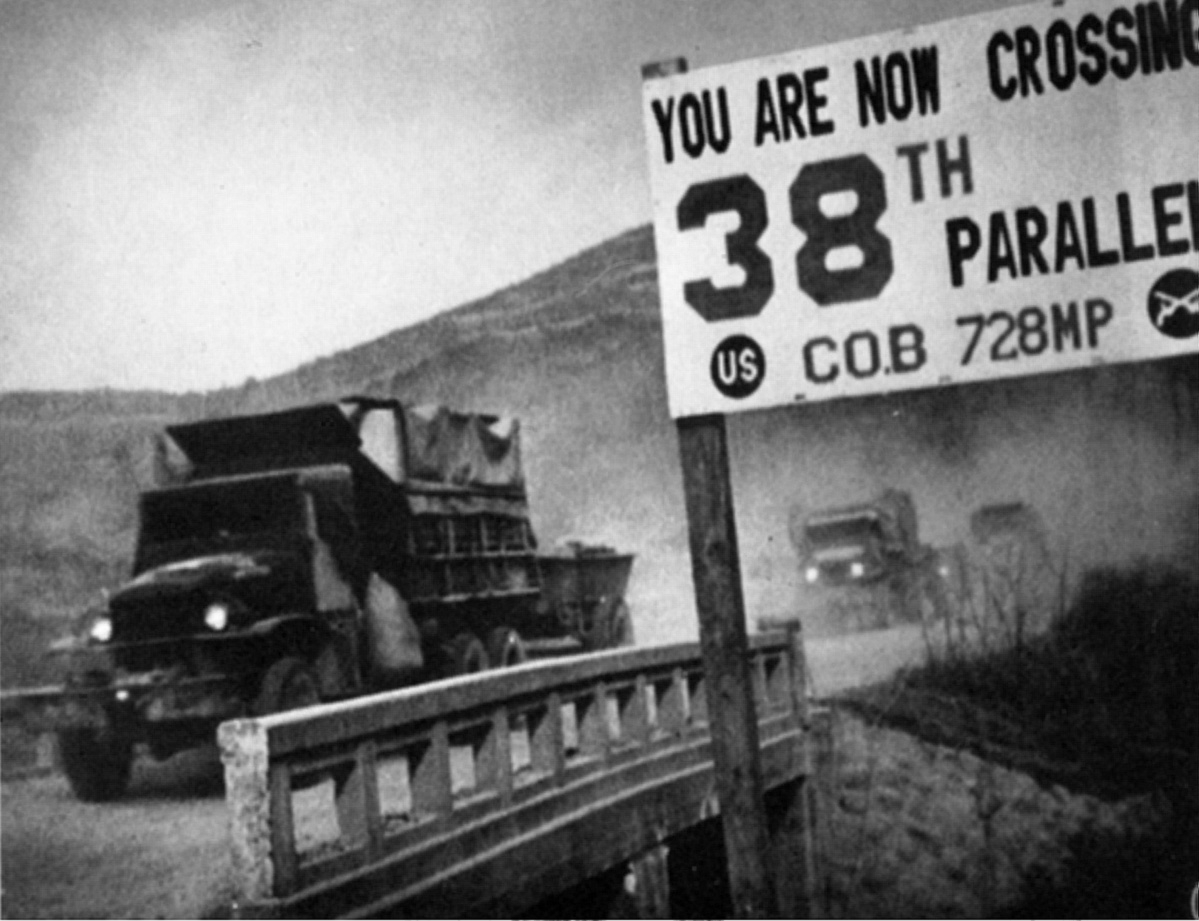
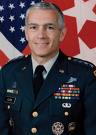
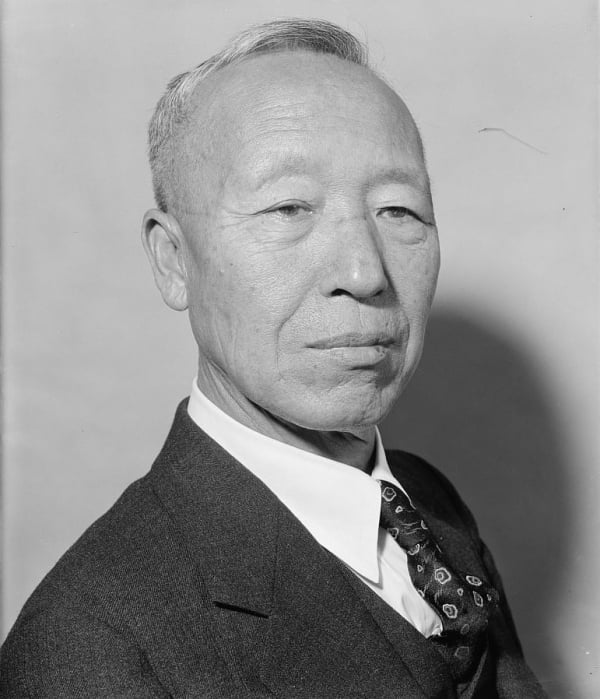
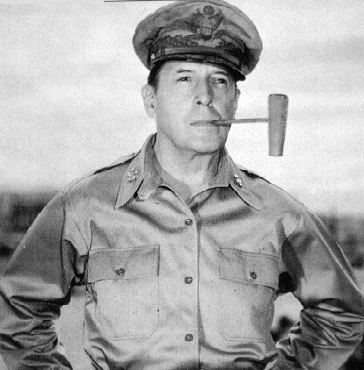

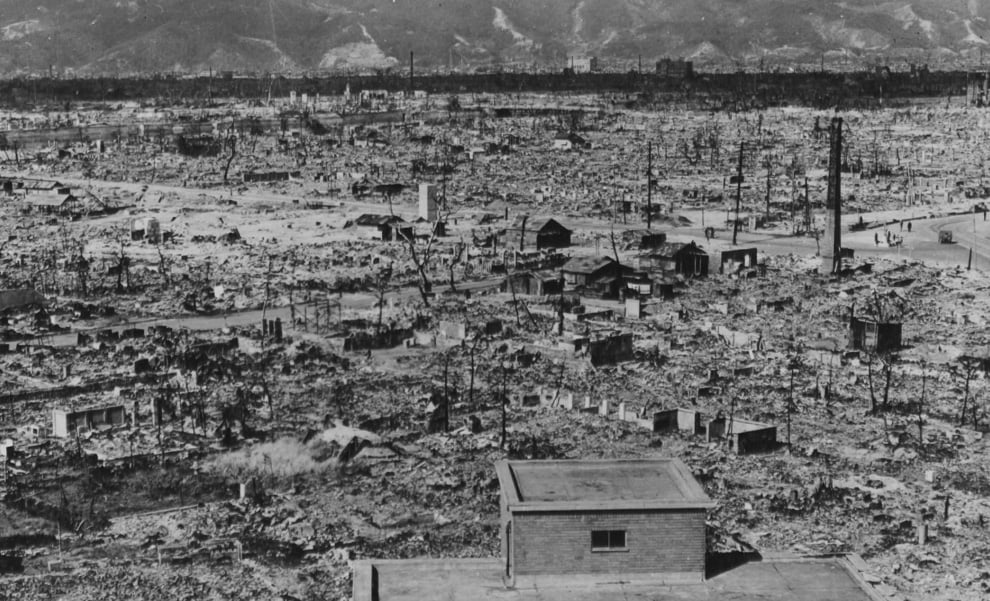
US Major General William F Dean “reported that most of the North Korean cities and villages he saw were either rubble or snow-covered wastelands”
General Curtis LeMay [left] who coordinated the bombing raids against North Korea brazenly acknowledged that:
“Over a period of three years or so we killed off – what – twenty percent of the population. … We burned down every town in North Korea and South Korea, too”. 9 According to Brian Willson: It is now believed that the population north of the imposed 38th Parallel lost nearly a third its population of 8 – 9 million people during the 37-month long “hot” war, 1950 – 1953, perhaps an unprecedented percentage of mortality suffered by one nation due to the belligerence of another.” 10
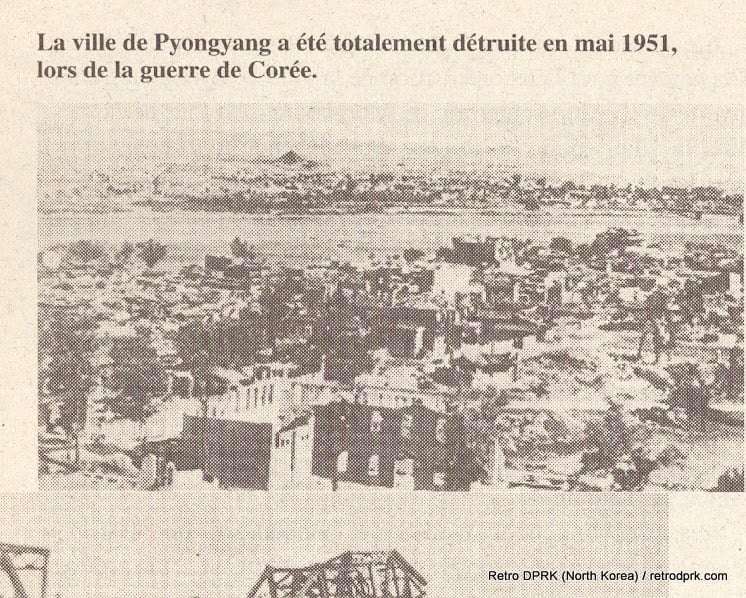


 The Korean War had set the stage for subsequent US military interventions. It was an initial phase of a post-World War II “military roadmap” of US led wars, special operations, coups d’etat, covert operations, US sponsored insurgencies and regime change spanning over of more than half a century. The project of global warfare has been carried out in all major regions of the World, through the US military’s geographic command structure, not to mention the CIA’s covert operations geared toward toppling sovereign governments.
This project of Worldwide conquest was initially established under the so-called “Truman Doctrine”. The latter initiated what the Pentagon later (in the wake of the Cold war under the NeoConservatives) entitled America`s “Long War”.
What we are dealing with is global warfare, a Worldwide process of conquest, militarization and corporate expansionism. The latter is the driving force. “Economic conquest” is implemented through the support of concurrent intelligence and military operations. Financial and monetary destabilization is another mechanism of economic warfare directed against sovereign countries.
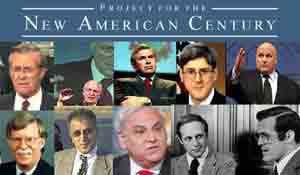
In 2000, preceding the eleciton of George W. Bush to the White House, The Project for a New American Century (PNAC), A Washington Neoconservative think tank had stipulated four core missions for the US military:
“defend the American homeland;
fight and decisively win multiple, simultaneous major theater wars;
perform the “constabulary” duties associated with shaping the security environment in critical regions;
transform U.S. forces to exploit the “revolution in military affairs;”
George W. Bush’s Deputy Defense Secretary Paul Wolfowitz, his Defense Secretary Donald Rumsfeld and Vice President Dick Cheney had commissioned the PNAC blueprint prior to the 2000 presidential elections.
The PNAC outlines a roadmap of conquest.
It calls for “the direct imposition of U.S. “forward bases” throughout Central Asia and the Middle East: “with a view to ensuring economic domination of the world, while strangling any potential “rival” or any viable alternative to America’s vision of a ‘free market’ economy”
Distinct from theater wars, the so-called “constabulary functions” imply a form of global military policing using various instruments of military intervention including punitive bombings and the sending in of US Special Forces, etc. Constabulary functions were contemplated in the first phase of US war plans against Iran. They were identified as ad hoc military interventions which could be applied as an “alternative” to so-called theater wars.
This document had no pretence: its objectives were strictly military. No discussion of America’s role in peace-keeping or the spread of democracy. 15 The main PNAC document is entitled



Comments
America’s War against the People of Korea: The Historical Record of US War Crimes Part 2 By Prof Michel Chossudovsky
Global Research, April 30, 2017
Global Research 13 September 2013
Region: Asia
Theme: Crimes against Humanity, History, Militarization and WMD, US NATO War Agenda
In-depth Report: CRIMINALIZE WAR, NORTH KOREA

United States Forces Korea | Mission of the ROK/US Combined Forces Command).
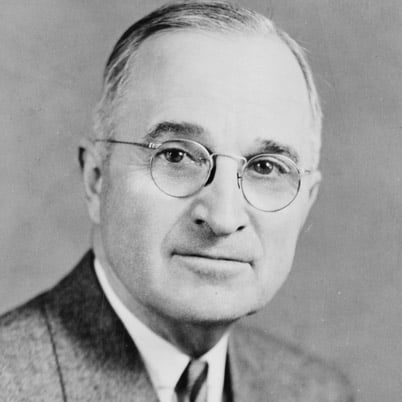
 In the words of president Harry Truman:
 “We simulated fighting a war in Korea, using a Korean scenario. … The scenario…simulated a decision by the National Command Authority about considering using nuclear weapons….We identified aircraft, crews, and [weapon] loaders to load up tactical nuclear weapons onto our aircraft….
With a capability to strike targets in less than 15 minutes, the Trident D5 sea-launched ballistic missile is a “mission critical system” for U.S. Forces Korea. Ballistic Missile Submarines and Long-Range Bombers
In addition to non-strategic air delivered bombs, sea-launched ballistic missiles onboard strategic Ohio-class submarines (SSBNs) patrolling in the Pacific appear also to have a mission against North Korea. A DOD General Inspector report from 1998 listed the Trident system as a “mission critical system” identified by U.S. Pacific Command and U.S. Forces Korea as “being of particular importance to them.”
Although the primary mission of the Trident system is directed against targets in Russia and China, a D5 missile launched in a low-trajectory flight provides a unique very short notice (12-13 minutes) strike capability against time-critical targets in North Korea. No other U.S. nuclear weapon system can get a warhead on target that fast. Two-three SSBNs are on “hard alert” in the Pacific at any given time, holding Russian, Chinese and North Korean targets at risk from designated patrol areas.
Long-range strategic bombers may also be assigned a nuclear strike role against North Korea although little specific is known. An Air Force map (see below) suggests a B-2 strike role against North Korea. As the designated carrier of the B61-11 earth penetrating nuclear bomb, the B-2 is a strong candidate for potential nuclear strike missions against North Korean deeply buried underground facilities.
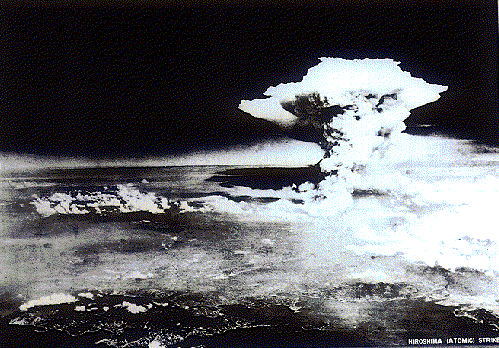
As the designated carrier of the B61-11 earth penetrating nuclear bomb [with an explosive capacity between one third and six times a Hiroshima bomb,see image right above] and a possible future Robust Nuclear Earth Penetrator, the B-2 stealth bomber (below)could have an important role against targets in North Korea. Recent upgrades enable planning of a new B-2 nuclear strike mission in less than 8 hours. 26
 Whereas officially the US deployment of nuclear weapons in South Korea lasted for 33 years, there is evidence that a large number of nuclear warheads are still stockpiled in South Korea.



USFK integrated by US forces is distinct from the Combined Forces Command (CFC) created in 1978. The CFC is commanded by a four-star U.S. general, with a four-star ROK Army general as deputy commander.17 (See
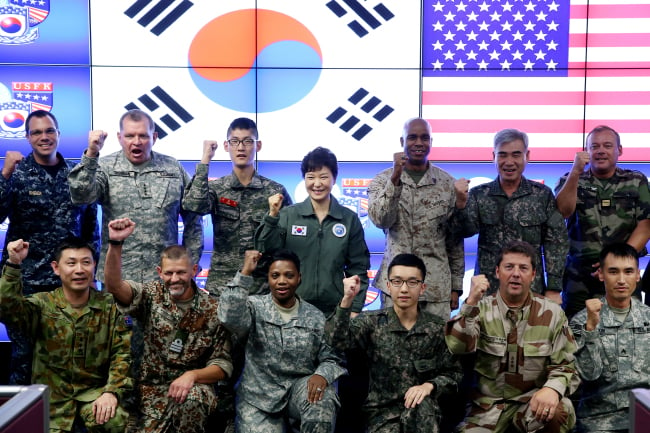
The current USFK commander is General James D. Thurman (See CFC photo op below) who also also assumes the position of CFC Commander and UNC Commander. 18 (See
United States Forces Korea | USFK Leadership).General Thurman who takes his orders from the Pentagon overrides ROK president and Commander in Chief Park Geun Hye.
Regular active troops of the ROK Armed Forces (Army, Navy and Air Force) theoretically under national ROK command consist of more 600,000 active personnel and more than 2 million reservists. According to the terms of the CFC, however, these troops are de facto under the CFC command which is headed by a US General.
What this means is that in addition to the 37,000 US troops of the USFK, the US command structure has de facto control over all operational units of the Korean Armed Forces. In essence, what this means is that the ROK does not control its armed forces. ROK armed forces essentially serve the interests of a foreign power.
President Park Geun-hye (center), Combined Forces Command commander Gen. James D. Thurman (second from left, back row), deputy CFC commander Gen. Kwon Oh-sung (second from right, back row) and allied troops. Source Korean Herald, 28 August 2013 Annually the US-ROK conducts war games directed against North Korea. These war games –which simulate a conventional and/or nuclear attack against North Korea– are often conducted in late July coinciding with Armistice Day. In turn, US military bases along South Korea’s Western coastline and on Jeju island are used to threaten China as part of a process of military encirclement. In view of the ROK-US agreement under the CFC, South Korean troops under US command are deployed in the context of US military operations in the region, which are actively coordinated with USFK and USPACOM. South Korea is multibillion bonanza for America’s weapons industry. In the course of the last 4 years the ROK ranked the fourth largest arms importer in the World “with the U.S. accounting for 77 percent of its arms purchases.” It should be noted that these weapons are purchased with Korean tax payers’ wons, they are de facto under the supervision of the US military, namely the CFC Joint Command which is headed by a US General. In recent developments, the ROK president has hinted towards the possibility of pre-emptive strikes against North Korea. “As commander-in-chief of the armed forces, I will trust the military’s judgment on abrupt and surprise provocations by North Korea as it is the one that directly faces off against the North,” Park said,
according to the London Telegraph. “Please carry out your duty of guarding the safety of the people without being distracted at all.”Park’s defense minister
also promised an “active deterrence” against Pyongyang and seemed to suggest Seoul would consider carrying out preemptive strikes on North Korean nuclear and missile sites. 19“We have discovered the most terrible bomb in the history of the world. … This weapon is to be used against Japan … [We] will use it so that military objectives and soldiers and sailors are the target and not women and children. Even if the Japs are savages, ruthless, merciless and fanatic, we as the leader of the world for the common welfare cannot drop that terrible bomb on the old capital or the new. … The target will be a purely military one… It seems to be the most terrible thing ever discovered, but it can be made the most useful.” 20 (
President Harry S. Truman, Diary, July 25, 1945)“The World will note that the first atomic bomb was dropped on Hiroshima a military base. That was because we wished in this first attack to avoid, insofar as possible, the killing of civilians..” (President Harry S. Truman in a radio speech to the Nation, August 9, 1945). [Note: the first atomic bomb was dropped on Hiroshima on August 6, 1945; the Second on Nagasaki, on August 9, on the same day as Truman’s radio speech to the Nation] Nobody within the upper echelons of the US government and military believed that Hiroshima was a military base, Truman was lying to himself and to the American public. To this day the use of nuclear weapons against Japan are justified as a necessary cost for bringing the war to an end and ultimately “saving lives”.
The Hiroshima Doctrine applied to Korea: US nuclear weapons stockpiled and deployed in South Korea During the Korean War, the US had envisaged the use of nuclear weapons against North Korea shortly after the Soviet Union had tested its first atom bomb in August 29, 1949, about ten months prior to the onset of the Korean War in June 1950. Inevitably, the possession of the atom bomb by the Soviet Union acted as a deterrent against the use of nuclear weapons by the US in the course of the Korean War. In the immediate wake of the Korean War, there was a turnaround in US nuclear weapons policy regarding North Korea. The use of nukes weapons had been envisaged on a pre-emptive basis against the DPRK, on the presumption that the Cold War nuclear powers, including China and the Soviet Union would not intervene. Barely a few years after the end of the Korean War, the US initiated its deployment of nuclear warheads in South Korea. This deployment in Uijongbu and Anyang-Ni had been envisaged as early as 1956. It is worth noting that the US decision to bring nuclear warheads to South Korea was in blatant violation of Paragraph 13(d) of the Armistice Agreement which prohibited the warring factions from introducing new weapons into Korea. The actual deployment of nuclear warheads started in January 1958, four and a half years after the end of the Korean War, “with the introduction of five nuclear weapon systems: the Honest John surface-to-surface missile, the Matador cruise missile, the Atomic-Demolition Munition (ADM) nuclear landmine, and the 280-mm gun and 8-inch (203mm) howitzer.” 21 (See
The nuclear information project: US Nuclear Weapons in Korea)
The nuclear information project: withdrawal of US nuclear weapons from South Korea,)
ArmsControl.org (April 2013) the United States
ArmsControl.org)Obama together with President Park Geun Hye at the DMZ Korea’s Economic Development The US military occupation of South Korea has largely supported and protected US economic and financial interests in Korea. From the very outset in 1945, there was no democratization of the South Korean economy. The exploitative Japanese factory system was adopted by the Korean business conglomerates, which were in part the outgrowth of the Japanese imperial system. At the outset this system was based on extremely low wages, Korea’s manufacturing base was used to produce cheap labor exports for Western markets, In many respects, the earlier Korean manufacturing base was a form of “industrial colonialism” in derogation of the rights of Korean workers. The rise of the South Korean business conglomerates (Chaebols) was the source of impressive economic growth performance starting in the 1970s. The Chaebols are conglomerates of many companies “clustered around one holding company”. The parent company is often controlled by single family or business clan. The latter in turn had close ties to officials in the ROK’s military governments. South Korea’s industrial and technological revolution constituted a challenge to Western capitalism. Despite US military presence, the ROK was no longer a “developing country” with a “dependent” economy. Inserted into a competitive World market, South Korean capitalism was competing with both Japanese and Western multinationals. The 1997 Asian Crisis: Financial Warfare Directed against South Korea The ROK had developed into a World capitalist power. It had acquired its own technological base, a highly developed banking system; it was categorised by the World Bank as a so-called “Asian tiger”. Yet at the same time, the entire political fabric –which included the conduct of macroeconomic policy– was controlled by Washington and Wall Street, not to mention the military presence of US occupation forces. The Asian crisis of 1997 was an important watershed. In late 1997, the imposition of an IMF bailout contributed to plunging South Korea, virtually overnight, into a deep recession. The social impact was devastating. Through financial manipulation of stock markets and foreign exchange markets by major financial actors, the Asian crisis contributed to weakening and undermining the Korean business establishment. The objective was to “tame the tiger”, dismantle the Korean business conglomerates, and restore US control and ownership over the Korean economy, its industrial base, its banking system. The collapse of the won in late 1997 was triggered by “naked short selling” on the foreign exchange markets. It was tantamount to an act of economic warfare. Several Korean business conglomerates were fractured, broken up or precipitated into bankruptcy on the orders of the IMF, which was acting on behalf of Wall Street. Of the 30 largest chaebols, 11 collapsed between July 1997 and June 1999. Following the IMF’s December 1997 financial bailout, a large part of the Korean national economy, its high tech sectors, its industrial base, was “stolen” by US and Western capital under various fraudulent clauses negotiated by the ROK’s creditors. Western corporations had gone on a shopping spree, buying up financial institutions and industrial assets at rock-bottom prices. The devaluation of the won, combined with the slide of the Seoul stock market, had dramatically depressed the dollar value of Korean assets. Acting directly on behalf of Wall Street, the IMF had demanded the dismantling of the Daewoo Group including the sell-off of the 12 so-called troubled Daewoo affiliate companies. Daewoo Motors was up for grabs. This was not a spontaneous bankruptcy, it was the result of financial manipulation, with a view to transferring valuable productive assets into the hand of foreign investors. Daewoo obliged under the IMF agreement to sell off Daewoo Motor to General Motors (GM) in 2001. Similarly, the ROK’s largest corporation Hyundai was forced to restructure its holding company following the December 1997 bailout. In April 1999 Hyundai announced a two-thirds reduction of the number of business units and “a plan to break up the group into five independent business groups”. This initiative was part of the debt reduction plan imposed by Western creditors and carried out by the IMF. It was implemented under what was called “the spin-off program” whereby the large Korean business conglomerates were to slated to be downsized and broken up into smaller business undertakings. In the process, many of the high tech units belonging to the large Korean holding companies were bought out by Western capital. South Korea’s banking landscape was also taken over by “US investors”. Korea First Bank (KFB), with a network of branches all over the country, was purchased at a negative price by the California based Newbridge Group in a fraudulent transaction. 34 A similar shady deal enabled the Carlyle Group –whose board of directors included former U.S. President George Herbert Walker Bush (Senior), his Secretary of State James A. Baker III, and former Defense Secretary Frank C. Carlucci — to take control of KorAm Bank in September 2000. KorAm was taken over in a Consortium led by The Carlyle Group in collaboration with JPMorgan Chase. KorAm Bank had been established in the early 1980s as a joint venture between Bank America and a group of Korean conglomerates. . Three years later, CitiBank purchased a 36.7 percent stake in KorAm from the Carlyle Group and then bought up all the remaining shares, in what was described as “Citibank’s biggest acquisition outside the Western Hemisphere”. 35 Following the 1997 Asian Crisis which triggered a multibillion dollar debt crisis, a new system of government had been established in South Korea, geared towards the fracture of Korea’s business conglomerates and the weakening of Korean national capitalism. In other words, the signing of the IMF bailout Agreement in December 1997 marks a significant transformation in the structure of the Korean State, whose regulatory financial agencies were used to serve the interests of Korea’s external creditors. Concluding Remarks: Towards Peace. The US is still at war with Korea. This US sponsored state of war is directed against both North and South Korea. It is characterised by persistent military threats (including the use of nuclear weapons) against the DPRK. It also threatens the ROK which has been under US military occupation since September 1945. Currently there are 37,000 US troops in South Korea. Given the geography of the Korean peninsula, the use of nuclear weapons against North Korea would inevitably also engulf South Korea. This fact is known and understood by US military planners. What has to be emphasized prior to forthcoming negotiations pertaining a “Peace Treaty” is that the US and the ROK are not “Allies”. The “real alliance” is that which unifies and reunites North and South Korea against foreign intrusion and aggression. What this signifies is that the US is in a state of war against the entire Korean Nation. The formulation of the Peace Treaty, therefore, requires the holding of bilateral talks between the ROK and the DPRK with a view to formulating a “joint position” regarding the terms to be included in a “Peace Treaty”. The terms of this Peace Treaty should under no circumstances be dictated by the US Aggressor, which is committed to maintaining its military presence on the Korean peninsula. It is worth noting in this regard, US foreign policy and military planners have already established their own scenario of “reunification” predicated on maintaining US occupation troops in Korea. Similarly, what is envisaged by Washington is a framework which will enable “foreign investors” to penetrate and pillage the North Korean economy. Washington’s objective is to impose the terms of Korea’s reunification. The NeoCons “Project for a New American Century” (PNAC) published in 2000 had intimated that in “post unification scenario”, the number of US troops (currently at 37,000) should be increased and that US military presence could be extended to North Korea. In a reunified Korea, the military mandate of the US garrison would be to implement so-called “stability operations in North Korea”: While Korea unification might call for the reduction in American presence on the peninsula and a transformation of U.S force posture in Korea, the changes would really reflect a change in their mission – and changing technological realities – not the termination of their mission. Moreover, in any realistic post-unification scenario, U.S. forces are likely to have some role in stability operations in North Korea. It is premature to speculate on the precise size and composition of a post-unification U.S. presence in Korea, but it is not too early to recognize that the presence of American forces in Korea serves a larger and longer-range strategic purpose. For the present, any reduction in capabilities of the current U.S. garrison on the peninsula would be unwise. If anything, there is a need to bolster them, especially with respect to their ability to defend against missile attacks and to limit the effects of North Korea’s massive artillery capability. In time, or with unification, the structure of these units will change and their manpower levels fluctuate, but U.S. presence in this corner of Asia should continue. 36 (PNAC,
Rebuilding America`s Defenses, Strategy, Forces and Resources for a New Century, p. 18, emphasis added)
https://www.youtube.com/watch?v=U2xO7Cn_xDU&feature=youtu.beMichel Chossudovsky is an award-winning author, Professor of Economics (emeritus) at the University of Ottawa, Founder and Director of the Centre for Research on Globalization (CRG), Montreal and Editor of the globalresearch.ca website. He is the author of The Globalization of Poverty and The New World Order (2003) and America’s “War on Terrorism”(2005). His most recent book is entitled Towards a World War III Scenario: The Dangers of Nuclear War (2011). He is also a contributor to the Encyclopaedia Britannica. His writings have been published in more than twenty languages. Michel Chossudovsky is a member of the Kuala Lumpur War Crimes Commission which initiated the indictment against George W. Bush et al “for crimes of torture and war crimes”. (Judgement of the Kuala Lumpur War Crimes Tribunal, 11 May 2012). Michel Chossudovsky can be reached at
crgeditor@yahoo.com