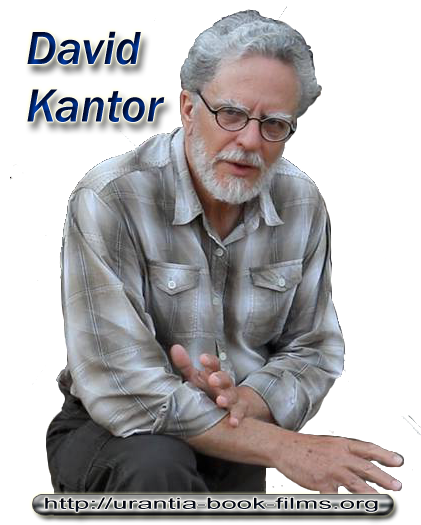
The Continuing Emergence of Urantia Religion: New Wineskins ● By David Kantor

The Continuing Emergence of Urantia Religion:
New Wineskins ● By Dave Kantor

 "A religious cult cannot be manufactured; it must grow."
"True religion is the devotion of the self to the service of meaningful and supreme values."
Quotes from The Urantia Book
Over the years there have been a number of conversations within the readership about starting a church or trying to start a Urantia religion of some sort. Groups in Oklahoma City, Boulder, Marin County, and other places actually formed church-like communities that served local readers for a while and then disappeared. On several occasions a considerable amount of money was spent on these projects.
This article contends that a distinctly Urantia religion has been evolving since the publication of the book in 1955. It is not only alive and well but is thriving and experiencing rapid growth. Urantia religion has been largely unrecognized because we're all subjectively immersed in it.
"The social ship has steamed out of the sheltered bays of established tradition and has begun its cruise upon the high seas of evolutionary destiny."
Let's go back to the point where the ship was still moored to the dock.
 How we got The Fellowship
 According to Bill Sadler, the revelators suggested that some sort of social organization be created for readers of the book. They specifically suggested something simple and were clear that they did not want to see a competing sect or denomination emerge. They said it would be a good idea to have something just to occupy the social space, to prevent someone else from doing it.
At the time—the 1950s—the most respectable social institution was the church. Local churches were the social hubs of most communities and even cities. If you didn't go to church on Sunday, there was something suspicious about you. In many places it was difficult to conduct business if you were not associated with a church. So the Sadlers set about researching social structures and came up with a model based on that of the Presbyterian church.
Sidebar: Three primary forms of church polity emerged from the Reformation in the 16th century:
1. Episcopalian—Authority, political power, and finacing permeates the institutional hierarchy from the top down. Leadership is appointed by individuals at higher levels in the heirarchy. The Catholic church today exemplifies an Episcopalian structure.
2. Congregational—Local communities are totally in control of their own affairs and financing. There is no hierarchical superstructure above local communities.
3. Presbyterian—Authority and power permeate the institutional hierarchy from the bottom up. Leadership is appointed within local communities and representatives are elected to higher levels in a larger organization linking and coordinating sub-units.
When the Sadlers presented their plan to the revelators they were told, "Well, if that's the best you can do, go ahead with it." The organizational structure of the Fellowship today was thus derived from a church model highly respected in the 1950s.
But not to despair! As the ship began to pull away from the dock the initial elements of what would become a radical new form of religious institution began to fall into place. As limited as it was, the Fellowship constitution provided a sufficient foundation enabling the readership to begin coalescing around a structure which would evolve into a 21st century networked religion.
The first nodes in the network were Societies in Chicago, Oklahoma City, and Los Angeles. In the 1950s the links between the nodes were tenuous—personal visits, written letters sent by mail, phone calls, and face-to-face meetings at occasional conferences. Each of these nodes spawned local subnetworks made up of regional study groups and served as local communication hubs.
Over the following two decades additional Society nodes began to appear along with the first nodes to develop outside of North America. The 1980s saw increasing struggles between a networked religion beginning to reach out to the world and the central node in Chicago struggling to maintain proprietary control over a growing readership increasingly motivated to share the revelation with the world.
Primary Elements of Urantia Religion
At this point we can already see the two primary elements of Urantia religion:
1. An evangelical drive to share the revelation with the world—service and outreach.
2. A desire to gather with other readers to study and share the exploration of the book—expanding the fellowship of God-knowing kingdom believers.
Urantia religion is unique in that its core religious elements are derived from a desire to socialize personal spiritual experience, rather than being based on specific beliefs, doctrines, rituals, or anything else that characterizes religion in the larger culture.
By the 1990s the sheltered bays of established tradition began to recede into the horizon as the copyright was put into the public domain concomittant with the spread of the Internet and the growing number of translations being published. The Internet provided the basis for a grass-roots movement to spring up simultaneously from many parts of the world—another unprecedented development in the history of religion.
The Urantia movement is the first major religious movement to be spawned in the age of the Internet. And just as Guttenburg's printing press drove the transformation of European civilization by making Bibles, tracts, and books available to an increasingly literate population, so is the Internet driving an unprecedented global social transformation, providing a vehicle through which the fifth epochal revelation is beginning to enhance spiritual perspectives in virtually every country on the planet.
In the early decades of the Internet the text of the book spread into every part of the world which had connections to the Internet. But as the 21st century got underway it was the development of social media that became the key element driving both revelation dissemination and the rapid growth of Urantia religion. Readers found themselves wanting to be involved in spreading the revelation and sharing its content; the Internet provided an ideal means for them to do so.
The Internet and social media provide the technological foundation for Urantia religion. Recall the two primary elements of Urantia religion identified earlier – dissemination and study. Urantia religion has become highly networked. There are now thousands of nodes in the network with more appearing almost daily. Each node catalyzes the sharing of information, communication between individuals, sharing within groups, and the building of diverse social communities.
The social media domain is seeing the emergence of new Urantia institutions whose structures have been designed to exploit Internet technologies. Urantia University, Perfecting Horizons Institute, Cosmic Citizen, Symmetry of Soul, Urantia Book Films, Truthbook, UrantiaNow, Square Circles, online Skype study groups—these are just a few of the reader-initiated expressions of Urantia religion.
Social media is also providing a basis for the emergence of online ministries which extend Urantia religion's dissemination thrust. Pato's "Followers of Christ Michael" study group, ministries being developed by Richard Stinson and Dave Jesusonian, God's Gumshoe, Dick Bain's service to Christians, Bill Rocap's Urantia group—along with dozens of other readers hosting online groups whose membership numbers in the thousands—these constitute the most vital nodes in networked Urantia religion, a religion that is spreading globally, rapidly. Social media is the environment to which new readers are drawn when they want to find out more about The Urantia Book.
What is networked religion?
One of the foremost researchers in this newly emerging field is Dr. Heidi Campbell of Texas A&M University. She comments that, "Central to the idea of networked religion is that religious practice emerges within a distinctive social sphere constructed of networked interactions. Networked religious communities function quite differently than traditional religious institutions and structures. Rather than operating as tightly bounded social structures, they function as loose social networks with varying levels of religious affiliation and commitment.
"The study of online religious community shows that, rather than living in a single static religious community, people in contemporary society increasingly live in religious social networks that are emergent, varying in depth, fluid, and highly personalized. The Internet challenges the role that religion traditionally has played in the process of socialization into an accepted religious belief and community."
Dr. Campbell lists five characteristics of networked religion in her article, Understanding the Relationship between Religion Online and Offline in a Networked Society, published in the March 2012 issue of Journal of the American Academy of Religion. The article expands these five elements. A copy is available via the link at the bottom of this document. I urge you to read it.
Characteristics of Networked Religion
1. Convergent Practice
—Personalized blending of information and rituals.
—Internet serves as a spiritual hub allowing people to assemble and personalize religious behavior and belief.
—Tension: Offering guidance and instruction to people who draw spiritual wisdom and practices from multiple sources and traditions.
2. Multi-site Reality
—Online and offline religious activities inform and shape each other.
—Tension: Offline contexts increasingly no longer serve as primary source for spiritual connections and knowledge.
3. Networked Community
—Loosely-bounded social networks.
4. Storied Identity
—Fluid and dynamic identity construction.
—Identity is constructed and performed online, encouraging malleable self-presentations.
—Tension: Religious identity becomes flexible and highly personalized, impacting wider understandings of what it means to be Christian.
5. Shifting Authority
—Simultaneous individual empowerment and challenge of traditional authority as bloggers, content creators, webmasters, and group administrators replace clergy on the front lines of religious development.
This, as I see it, is the current state of Urantia religion—a religion which has evolved around the dissemination of the revelation and the development of reader communities.
The Urantia Book is part of a much greater social transformation taking place in the world that is being driven by a rapid sequence of technological changes profoundly impacting human communications and modes of interaction, both of which are intimately tied to Urantia religion.
Urantia religion is a robust expression of a new religious phenomena—networked religion. It is a collective expression of countless readers mobilized by an epochal revelation, led by the Spirit of Truth. Urantia religion not only is alive and well, but is thriving and experiencing explosive growth completely outside the domain of traditional institutional structures. It is far more healthy and viable as an organic product of evolution than anything we could design or fabricate from our limited experience, idealism, and zeal.
The concept of networked religion presents a radically new paradigm which must be understood and embraced if we're to optimize our ability to propagate the revelation and foster emerging Urantia religion.
 Highly Recommended:
Dr. Heidi Campbell's article, Understanding the Relationship between Religion Online and Offline in a Networked Society
What do we do Now? Examples and background on how the locus of dissemination has shifted from Urantia institutions to the networked readership
SOURCE
About the Author
 .



