Urantia Association International Journal May 2022

Editor’s Note – May 2022
In This Issue
Editor’s Note – May 2022 – Mark Blackham
Legacy and Inspiration – Neal Waldrop, USA
The What Book? – Christopher Ross, USA
The Hazards of a Decimal Planet – Claude Flibotte, Canada
Why Participate in a Study Group? – Gaétan Charland, Canada
About the Journal – Admin Team
Contribute – Admin Team
Journal - May 2022, By Mark Blackham on May 11, 2022
 Welcome to the May 2022 edition of the Urantia Association’s Journal, a publication dedicated to the thoughts, observations, and experiences of Urantia Book students from around the world. Our contributors explore a wide range of topics, including personal stories of spiritual discovery, finding new meanings and values, and enhancing spiritual perception. Others write about cosmology, science, and ways to improve global civilization. Throughout all these articles, we see an extraordinary diversity of thought and a spirited unity of purpose.
Our first article, Legacy and Inspiration by Neal Waldrop, addresses the long-debated topic about how The Urantia Book should be disseminated in contemporary society. Neal argues that the evangelical, mass-marketing method of spreading the teachings is ineffective in the present age, primarily because it is difficult to attract people who are just not interested in spirituality, philosophy, or cosmology. He maintains that we should continue “to rely on person-to-person contact and other techniques that are consensual and informal.” Neal takes a unique perspective by contrasting the ways in which Christianity was forcibly spread in Europe during the early Middle Ages as opposed to more recent methods of evangelical work in Western civilization in the 19th and 20th centuries. He argues that neither method would work effectively today, hence the need to patiently continue with the consensual approach.
The second article, The What Book? by Christopher Ross, is a light-hearted account of how he came across The Urantia Book in 2009 after decades of exploring an array of spiritual avenues in his persistent search for truth. Many of us can relate to his initial experiences, a mix of wonder, intrigue, bafflement, and uncertainty. But as he wisely observes, “nothing can really prepare one for The Urantia Book, … except an open mind and a willingness to set aside all previous personal cosmologies and entertain the notion that perhaps this book is true—is Truth.” His open attitude of mind, so essential to any progress, eventually culminated in a eureka moment of truth, “Many months later, I came out the other side. From hope to certainty. From isolation to connection.”
The third article, The Hazards of a Decimal Planet by Claude Flibotte, is a foray into the failures and accomplishments that have transpired over time on the experimental world of Urantia. Claude’s list includes a number of biological upsets as well as upsides, but he also notes the defaults and victories of planetary administration. He points out that, before the advent of mankind, there were two evolutionary forces at work—natural selection and the environmental manipulations of the Life Carriers. But after the appearance of humans, Life Carriers could no longer interfere, although there has been considerable input in other ways, such as The Urantia Book revelation. But the question is—can we adapt, cope, and survive this revelation?
Our final article, Why Participate in a Study Group? by Gaétan Charland, is a thoughtful and probing insight into the spiritual value of study groups. Gaétan spent a number of years leading the Association’s Study Group Committee and has much experience with the organization and methods of study groups, as well as a comprehensive understanding of the benefits and strengths of active and engaged groups. He outlines some of the dangers of reading the book in isolation, including misconceptions due to incomplete readings of the book. A study group not only counters this isolation through beneficial social contact but, by listening to the diverse views and interpretations of others, it “protects us from the crystallization of concepts and perceptions, helps us to clarify, broaden, and deepen our understanding of the concepts and truths revealed in The Urantia Book.” Gaétan reminds us of the mission, philosophy, and purpose of study groups, an understanding that invigorates growth by fostering a sense of brotherhood as well as an awareness of cosmic consciousness.
Future generations shall know also the radiance of our joy, the buoyance of our good will, and the inspiration of our good humor. – Jesus [159:3.10]
Read more about Announcements, Editorials.
Share this article:
 Legacy and Inspiration
From Journal - May 2022, By Neal Waldrop, USA on May 10, 2022
 Almost everyone who encounters the fifth epochal revelation and who finds the teachings moving and inspiring, desires to share them with other human beings and help them experience the same spiritual benefits. This is entirely natural, and I reacted that way myself. On the other hand, immediate personal efforts along such lines almost invariably prove disappointing, and that was certainly what happened to me.
Over the next ten years or so, I eventually came to believe that the key criterion is whether or not the other person is relatively dissatisfied with his or her existing approaches to spirituality and the philosophic side of life — the question of whether or not he or she is really searching for more advanced levels of understanding and belief, even if the person concerned is not fully aware of this search and is not pursuing it consciously and deliberately.
To summarize these conclusions, I became convinced that if the other person was either fully satisfied with his or her existing approaches to spirituality and the philosophic side of life, or was just not very interested in these topics, then he or she would not be willing to devote the time, effort, and energy required to delve deeply into the teachings of The Urantia Book and eventually embrace them with conviction and commitment.
In effect, this perspective is not conducive to “mass marketing” and, in addition, antithetical to the traditional methods of “evangelization” that various strands of organized, institutional Christianity endeavored to apply during the 19th and 20th centuries. These underlying realities, however, were not always obvious to everyone. Further, in the course of the first few decades that followed initial publication in 1955, some readers who tended to emphasize resemblances to Christianity found the point very difficult to accept.
Trends and Patterns
A partial misunderstanding of what happened during the early centuries of the Christian era appears to have influenced some readers of The Urantia Book who perceived or proclaimed a need for us to “evangelize” the teachings, and who therefore made the case from time to time during the second half of the 20th century and the early decades of the 21st. In contrast, I offer the following observations in the belief that they are relevant and useful. In all modesty, however, I must make it clear that I am not an expert and that a university professor who specializes in the history of Christianity might analyze the underlying events along lines that are somewhat different.
The initial advance of the Christian faith was almost entirely a result of personal contact and persuasion, although public preaching did occur in some contexts where social practices and political circumstances permitted it.[1] To make essentially the same point from the opposite perspective, the initial advance of the Christian faith did not stem from intense study of, or devotion to, a written text. During the first few centuries of the Christian era, the overwhelming majority of persons living in the Roman Empire were illiterate. Furthermore, the New Testament did not exist as a complete, coherent document until the middle of the fourth century — well after the Emperor Constantine and his successors had begun adopting a series of policies that eventually made Christianity the state religion of the Roman Empire.
In practical terms, it took over 300 years for committed Christians to evaluate and authenticate the exact list of 27 books that compose the New Testament, although a variety of devotional texts had been available in selected locations at much earlier stages. When the New Testament really did become available, and for many centuries thereafter, conversion to Christianity was not predicated on systematic study. To the contrary, the fact that the Christian faith had become the state religion of the Roman Empire caused a very high proportion of the population “to go with the flow.” Furthermore, the ranks of priests and bishops suffered a heavy infusion of time servers, opportunists, and careerists. This does not mean that all of them were insincere or that they were indifferent to the underlying religious values, just that material factors and other practical advantages caused a considerable number of human beings to seize the opportunity to benefit from imperial patronage and the government’s financial resources.
After the western half of the Roman Empire ceased to exist in 476 CE, the conversion to Christianity of the various tribes and ethnic groups that exercised authority over segments of western Europe did not stem from personal persuasion or from evangelization in any sense that we would recognize. To the contrary, specific chieftains, kinglets, and kings decided to convert, and these political decisions of theirs compelled their subjects to trail on after them. Here is the general account that appears in the highly regarded history of Christianity by the British scholar Diarmaid MacCulloch:
[2]
How, then, did the Western Church convert Europe piece by piece between the thousand years which separated Constantine I from the conversion of Lithuania in 1386? At the time, those who described the experience normally used more passive and more collective language than the word ‘conversion’: a people or a community ‘accepted’ or ‘submitted to’ the Christian God and his representatives on earth. This was language which came naturally: groups mattered more than single people, and within groups there was no such thing as social equality. Most people expected to spend their lives being given orders and showing deference, so when someone ordered dramatic change, it was a question of obeying rather than making a personal choice. Once they had obeyed, the religion which they met was as much a matter of conforming to a new set of forms of worship in their community as of embracing a new set of personal beliefs. Christian missionaries were just as much at home with worldly as with supernatural power. They expected people to be unequal, that was what God wanted, and inequality was there to be used for God’s glory. Mass rallies were not their style; most evangelists were what we would call gentry or nobility, and they normally went straight to the top when preaching the faith. That way they could harvest a whole kingdom, at least as long as local rulers did not have second thoughts or take a better offer.
In much the same spirit, many native speakers of English relish the story that the monk Bede tells in Book II, Chapter 13 of his celebrated work The Ecclesiastical History of the English People. (Bede wrote in the year 731 CE, but in this particular passage he was recounting events that had occurred over one hundred years earlier.)
Bede states that in the year 627 CE, King Edwin of Northumbria decided that Christianity would henceforth be the official religion for himself, for his court, and for all his people. What, Northumbria, not England or Scotland? Yes, Northumbria, for in the year 627, the kingdoms of England and Scotland had not yet been invented. Northumbria was one of various small realms that shared the terrain we now call England — in this case the northeastern portion of England that includes the city of York, as well as a limited, southeasternmost portion of the land that we currently call Scotland.
In his great hall, King Edwin of Northumbria has just introduced an honored guest, a monk named Paulinus who has traipsed to Northumbria from Kent. Paulinus is draped in a long tan robe composed of a rough fabric that might reverently be called burlap; this style of apparel seems to reflect a conviction that the creator who fashioned chrysanthemums and roses and the lilies of the field prefers that his devoted servants succumb to habiliments that might more appropriately enshroud a sack of sand. A rough white cord encircles Paulinus’s waist, a cord that, if coiled and cast carefully, might suffice to lasso a wayward duck.
Now Paulinus, as you may already have imagined, is visiting Northumbria because he wants King Edwin and his people to abandon pagan practices and convert to Christianity. Although the king has expressed a tentative desire to accept that summons, he has convened his counselors and advisers to hear their views. Surprisingly enough, the chief priest responsible for pagan rituals is inclined to agree, for he frankly admits that “the religion that we have hitherto professed seems valueless and powerless” (Ecclesiastical History, Book II, Chapter 13). Another of the king’s chief men concurs with that appraisal and then declares:
Your Majesty, when we compare the present life of man on earth with that time of which we have no knowledge, it seems to me like the swift flight of a single sparrow through the banqueting-hall where you are sitting at dinner on a winter’s day with your thegns and counsellors. In the midst there is a comforting fire to warm the hall; outside, the storms of winter rain or snow are raging. This sparrow flies swiftly in through one door of the hall, and out through another. While he is inside, he is safe from the winter storms; but after a few moments of comfort, he vanishes from sight into the wintry world from which he came. Even so, man appears on earth for a little while; but of what went before this life or of what follows, we know nothing. Therefore, if this new teaching has brought any more certain knowledge, it seems only right that we should follow it. [Ecclesiastical History, Book II, Chapter 13]
This apparently was decisive in the year 627, and Christianity then became the official religion of the Kingdom of Northumbria. Please note that King Edwin’s decision was binding on all his subjects, thereby depriving them of any opportunity to dissent or take issue with his royal edict. Thus, Bede’s story serves to epitomize the underlying reality: During the centuries that followed the collapse of the western half of the Roman Empire, the Christian faith was imposed from above by the authority of chieftains, kinglets, and kings, not as a result of any process whereby individuals were persuaded or were converted in a spiritual sense.
[3] In relation to western Europe as a whole, a considerably more influential event had occurred when Clovis was baptized in the year 496 CE (Clovis, the chieftain of the Salian Franks, unified all the Franks and became their first king). In effect, the baptism of Clovis initiated a long sequence of events that finally caused the pope to crown the Emperor Charlemagne in the year 800 CE. Around that year, Charlemagne’s troops conquered the pagan Saxons (persons living in the region of north central Germany that is still called Saxony), then converted them to Christianity by force of arms.
Throughout the Middle Ages, the Christian faith was a matter of state policy, not individual choice. Anyone who dissented publicly was actively pursued and, if possible, persuaded to recant. In contrast, however, many persistent dissenters who refused to conform to the united dictates of church and state ended up being burned at the stake.
As late as the Treaty of Westphalia (1648)
[4]— the treaty that concluded the Thirty Years War in Germany and thereby ended the entire period of the wars of religion — the operating principle in regard to religion was expressed in the Latin phrase cuius regio ejus religio. In literal terms, this means “whose the rulership, his the religion.” If we prefer a more natural and more fluent translation, we can interpret the phrase to mean: “The religion of the ruler shall be the religion of the people.”
For all these reasons, and for yet others, the original tradition of Christianity featured the union of church and state, or at least a strong partnership involving duties and responsibilities that were interrelated and shared. The tolerance and pluralism that now prevail in the West descend from reforms that began in the 18th century, but they took approximately 100 years to be adopted in the great majority of countries having social and cultural backgrounds that are predominantly Christian.
By implication, readers of The Urantia Book who have wished to apply the techniques of Christianity in order to promote and propagate the teachings of the fifth epochal revelation are approaching these questions very selectively and with a heavy dose of “presentitis,” especially since they have tended to focus almost exclusively on practices applied in North America during the last few centuries. Even if we disregarded all of the above, the plain fact of the matter is that the evangelistic campaigns conducted in North America during the 19th and 20th centuries were heavily influenced by — and largely dependent on — a social and cultural environment that was predominantly Christian.
This social and cultural environment is actually a net disadvantage for persons who wish to promote interest in the teachings of The Urantia Book because the fifth epochal revelation includes many aspects disputing and contradicting conventional beliefs that are crucial to the Christian tradition. The atonement doctrine is the most obvious example, the idea that Jesus died on the cross to atone for our sins and appease the wrath of an angry Father.
Furthermore, persons who seek to promote the teachings of The Urantia Book cannot possibly offer the “deal” that has been a prominent selling point for advocates of Christianity for approximately 2,000 years: the claim that becoming a Christian and following traditional Christian teachings will enable the believer “to go to heaven,” whereas, as a corollary, someone who refuses to believe or who refuses to conform may be consigned to eternal punishment. In contrast, the revelators do not tell us that if someone accepts the teachings of The Urantia Book, this commitment ensures that he or she will survive into the afterlife.
How, then, did the Western Church convert Europe piece by piece between the thousand years which separated Constantine I from the conversion of Lithuania in 1386? At the time, those who described the experience normally used more passive and more collective language than the word ‘conversion’: a people or a community ‘accepted’ or ‘submitted to’ the Christian God and his representatives on earth. This was language which came naturally: groups mattered more than single people, and within groups there was no such thing as social equality. Most people expected to spend their lives being given orders and showing deference, so when someone ordered dramatic change, it was a question of obeying rather than making a personal choice. Once they had obeyed, the religion which they met was as much a matter of conforming to a new set of forms of worship in their community as of embracing a new set of personal beliefs. Christian missionaries were just as much at home with worldly as with supernatural power. They expected people to be unequal, that was what God wanted, and inequality was there to be used for God’s glory. Mass rallies were not their style; most evangelists were what we would call gentry or nobility, and they normally went straight to the top when preaching the faith. That way they could harvest a whole kingdom, at least as long as local rulers did not have second thoughts or take a better offer.
In much the same spirit, many native speakers of English relish the story that the monk Bede tells in Book II, Chapter 13 of his celebrated work The Ecclesiastical History of the English People. (Bede wrote in the year 731 CE, but in this particular passage he was recounting events that had occurred over one hundred years earlier.) Bede states that in the year 627 CE, King Edwin of Northumbria decided that Christianity would henceforth be the official religion for himself, for his court, and for all his people. What, Northumbria, not England or Scotland? Yes, Northumbria, for in the year 627, the kingdoms of England and Scotland had not yet been invented. Northumbria was one of various small realms that shared the terrain we now call England — in this case the northeastern portion of England that includes the city of York, as well as a limited, southeasternmost portion of the land that we currently call Scotland. In his great hall, King Edwin of Northumbria has just introduced an honored guest, a monk named Paulinus who has traipsed to Northumbria from Kent. Paulinus is draped in a long tan robe composed of a rough fabric that might reverently be called burlap; this style of apparel seems to reflect a conviction that the creator who fashioned chrysanthemums and roses and the lilies of the field prefers that his devoted servants succumb to habiliments that might more appropriately enshroud a sack of sand. A rough white cord encircles Paulinus’s waist, a cord that, if coiled and cast carefully, might suffice to lasso a wayward duck. Now Paulinus, as you may already have imagined, is visiting Northumbria because he wants King Edwin and his people to abandon pagan practices and convert to Christianity. Although the king has expressed a tentative desire to accept that summons, he has convened his counselors and advisers to hear their views. Surprisingly enough, the chief priest responsible for pagan rituals is inclined to agree, for he frankly admits that “the religion that we have hitherto professed seems valueless and powerless” (Ecclesiastical History, Book II, Chapter 13). Another of the king’s chief men concurs with that appraisal and then declares: Your Majesty, when we compare the present life of man on earth with that time of which we have no knowledge, it seems to me like the swift flight of a single sparrow through the banqueting-hall where you are sitting at dinner on a winter’s day with your thegns and counsellors. In the midst there is a comforting fire to warm the hall; outside, the storms of winter rain or snow are raging. This sparrow flies swiftly in through one door of the hall, and out through another. While he is inside, he is safe from the winter storms; but after a few moments of comfort, he vanishes from sight into the wintry world from which he came. Even so, man appears on earth for a little while; but of what went before this life or of what follows, we know nothing. Therefore, if this new teaching has brought any more certain knowledge, it seems only right that we should follow it. [Ecclesiastical History, Book II, Chapter 13] This apparently was decisive in the year 627, and Christianity then became the official religion of the Kingdom of Northumbria. Please note that King Edwin’s decision was binding on all his subjects, thereby depriving them of any opportunity to dissent or take issue with his royal edict. Thus, Bede’s story serves to epitomize the underlying reality: During the centuries that followed the collapse of the western half of the Roman Empire, the Christian faith was imposed from above by the authority of chieftains, kinglets, and kings, not as a result of any process whereby individuals were persuaded or were converted in a spiritual sense.
Contrasting Approaches to the Fifth Epochal Revelation
In substance, periodic tension and controversy about the perceived need for “evangelization” are at least partly a consequence of contrasting approaches to the teachings of the revelators. Over the period of nearly 70 years that have elapsed since initial publication of The Urantia Book in 1955, many readers have tended to emphasize:
(a) Resemblances to Christianity or, at least, to those aspects of Christian teachings that are psychologically appealing.
Others, however, have mainly called attention to:
(b) Much broader ideas that are innovative and conceptually profound — elements that certainly include religion and spirituality, but also many other factors that contribute to the complex interactions of matter, mind, and spirit as the fundamental components of finite reality and as key ingredients of God’s plans for us.
Although my own personal views definitely associate me with option (b), I fully accept that a substantial number of readers of The Urantia Book prefer option (a). They are entitled to this preference, which tends to be associated with a strong concentration on Part IV and substantially less interest in the complex teachings that the revelators have arrayed in Parts I, II, and III. Furthermore, I agree that the narrative and analysis of the life and teachings of Jesus that the Midwayer Commission provides in Part IV contain a myriad of inspiring insights that can and do stimulate profound reflection — insights that can likewise be a highly productive tool for fostering and promoting personal growth from spiritual perspectives.
On the other hand, in section 6 of Paper 110, a Solitary Messenger informs us:
The psychic circles are not exclusively intellectual, neither are they wholly morontial; they have to do with personality status, mind attainment, soul growth, and Adjuster attunement. The successful traversal of these levels demands the harmonious functioning of the entire personality, not merely of some one phase thereof. The growth of the parts does not equal the true maturation of the whole; the parts really grow in proportion to the expansion of the entire self — the whole self — material, intellectual, and spiritual.
It is to the mind of perfect poise, housed in a body of clean habits, stabilized neural energies, and balanced chemical function — when the physical, mental, and spiritual powers are in triune harmony of development — that a maximum of light and truth can be imparted with a minimum of temporal danger or risk to the real welfare of such a being. By such a balanced growth does man ascend the circles of planetary progression one by one, from the seventh to the first.
Perhaps these psychic circles of mortal progression would be better denominated cosmic levels — actual meaning grasps and value realizations of progressive approach to the morontia consciousness of initial relationship of the evolutionary soul with the emerging Supreme Being. And it is this very relationship that makes it forever impossible fully to explain the significance of the cosmic circles to the material mind. These circle attainments are only relatively related to God-consciousness. A seventh or sixth circler can be almost as truly God-knowing — sonship conscious — as a second or first circler, but such lower circle beings are far less conscious of experiential relation to the Supreme Being, universe citizenship. The attainment of these cosmic circles will become a part of the ascenders’ experience on the mansion worlds if they fail of such achievement before natural death. (Presented by a Solitary Messenger) [Paper 110:6.3,4 and 110:6.16, pages 1209:3,4 and 1211:1]
With all these relationships in mind, I believe that close study of, and appropriate attention to, all 2,097 pages of the fifth epochal revelation — Parts I, II, and III as well as Part IV — are more likely to promote and foster whole-personality growth as the Solitary Messenger has described it. Even so, however, this approach to The Urantia Book is certainly not a precondition for spiritual growth, nor for our future morontia careers on the mansion worlds. Persons who do not take full advantage of the possibilities for whole-personality growth that are available to us while we are living on Urantia will be able to make up for that during the ascendant life.
For all the reasons I have summarized above and for many other reasons that may be even more convincing, readers of The Urantia Book are amply entitled to adopt and pursue their own approaches to the teachings. This, after all, is an intrinsic feature of their free will and of the personal decisions that they make. What readers of The Urantia Book are not entitled to do, however, is to dictate to other human beings or to insist, “My way or the highway.” Unfortunately, both sides of the controversies that arose in North America during the 1980s tended to interpret the actions and opinions of persons in the other camp as evidence of a tyrannical desire to dominate and control.
Strategies for Outreach
Many of the practical questions that became controversial in the 1980s can be interpreted as “slow growth” versus “active outreach,” but there may be persuasive reasons to paraphrase these alternatives as “patience” versus “impatience.” Persons who favor very active strategies for outreach, either then or now, may indeed reject this interpretation, insisting that their impulses and proposals are just rational and reasonable options that take appropriate account of the immensely meaningful and moving ideas and insights that the revelators have enshrined in the fifth epochal revelation, as well as the need for committed readers of The Urantia Book to act with commendable energy and enthusiasm. Naturally they do not want to be identified as “impatient,” for we are all intensely aware that impatience made very substantial contributions to the catastrophic failures of the first and second epochal revelations.
Since I doubt that semantic disputes over the words “patience” and “impatience” will get us very far, let us examine the practical situation as realistically as we can. After all, we, the readers of The Urantia Book, are operating on uncharted terrain. We cannot rely on or settle for techniques inherited from the traditions of spirituality and religion that have pervaded the Western world for most of the past two millennia.
The horizons of the fifth epochal revelation most certainly include spirituality and religion, but we must bear in mind that the revelators’ goals, ideals, and perspectives also encompass many other dimensions of human life and experience. Furthermore, the traditions of evangelism inherited from Christianity were aimed at promoting interest in a much simpler set of ideas, whereas delving deeply into the teachings of The Urantia Book and eventually embracing them with conviction and commitment requires far more time, effort, energy, and dedication. As I stated in the first few paragraphs of this essay, I believe that only an individual who is at least implicitly searching for more advanced levels of understanding and belief will be willing to embark on the extended and arduous quest for personal transformation that the revelators implicitly call for.
With all this in mind, I counsel patience and persistence, mainly continuing to rely on person-to-person contact and other techniques that are consensual and informal. This, of course, can and should include conferences, seminars, courses, study group meetings, and other types of voluntary gatherings, without resorting to mass-market advertising or other forms of publicity aimed at the general population. In section 6 of Paper 52, a Mighty Messenger informs us:
Even on normal evolutionary worlds the realization of the world-wide brotherhood of man is not an easy accomplishment. On a confused and disordered planet like Urantia such an achievement requires a much longer time and necessitates far greater effort. (Presented by a Mighty Messenger) [Paper 52:6.2, page 597.3]
References
[1] Although scholars offer different estimates of the proportion of the inhabitants of the Roman Empire who were Christians in the year 313 CE (when the Emperor Constantine issued the Edict of Milan proclaiming religious toleration), ten percent appears to be the upper limit. In contrast, many scholars believe that this estimate is an exaggeration.
[2] Pages 342-343 of Christianity: The First Three Thousand Years by Diarmaid MacCulloch. New York: Viking, 2010.
[3] The historian Diarmaid MacCulloch comments: “Bede probably made the speech up, as historians did at the time, but he made it up because he thought that his readers would think it plausible” (pages 343-344 of Christianity: The First Three Thousand Years).
[4] From political and diplomatic perspectives, many historians declare that the Treaty of Westphalia created the nation-state system that still prevails today, although it is reasonable and persuasive to point out that the Charter of the United Nations (adopted in 1945) modified the nation-state system in certain ways that are significant and substantial.
Read more about Philosophy & Religion, Christianity, History.
Share this article:
The What Book?
From Journal - May 2022, By Christopher Ross, USA on May 10, 2022
Part I
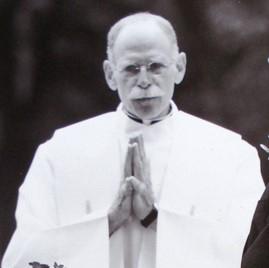 Back in high school, I would have been voted “Most Likely to Volunteer for Alien Abduction.” Thus, I was immediately intrigued by a magazine ad I saw in 2009 for something called The Urantia Book.
The offer was for not just one, but two copies of the book, one indexed and the other not, and they were free. What could I lose? Of course, there was the possibility that along with the books would come a few survivalists to whisk me off to a commune in Idaho where I would be forced to hoard water, guns, and apocalypse-proof tins of food, but I suspected that if anyone actually did show up with my books, “he” or “she” would have come from somewhere a bit beyond Idaho. So, I took the plunge and went to the website pitching the book.
Soon a box arrived containing two copies of The Urantia Book. The unindexed version clocked in at 2,097 pages; the indexed version, set in a two-column format, covered 1,814 pages, followed by a 312-page Index. As a result, despite the tissue-thin paper, each volume must have weighed several pounds; not exactly light reading in every sense of the word.
I studied the front matter and the dust jackets and decided to read the indexed version. Maybe I thought the two-column format would go faster—hah!—or that it would be great to have an index—an invaluable asset indeed, as it turned out—but it was really the back of the dust jacket that sold me on this particular volume, despite the promise that the text within the two books was identical.
“The Urantia Book,” I was informed, “presents comprehensive answers to age-old questions about the nature and personality of God, the life and teachings of Jesus, the relationship between science and religion, spiritual living and much more. It provides detailed descriptions of a vast universe containing millions of worlds… inhabited by a host of diverse celestial personalities, both human and superhuman.”
Even better, I learned, “After this life you continue your spiritual journey of growth and adventure, passing through the many higher worlds of the universe until, in the distant future, you arrive on Paradise, outside of space and time at the geographic center of infinity.” (I did wonder, though: how can infinity have a center if it is, uh, well, infinite? I am still stumped by this question.)
Even better than that, I read, “Many are convinced that [The Urantia Book] is a genuine revelation, but only personal experience can validate that claim. Explore The Urantia Book and decide for yourself.” I was hooked.
Part II
Way back in 1989, I participated in a week-long residential seminar at The Monroe Institute in Faber, Virginia. Founded by Robert Monroe, the institute was created to explore expanded states of consciousness using a technology called Hemi-Sync.
Bob Monroe was still alive then and spoke to our group one night. Several times during his presentation he reiterated, “This is not a dogma. This is not a philosophy.” Then, echoing the back cover of The Urantia Book, he added, “Go out and explore for yourself.” Suddenly, twenty years later, I was being presented with a similar opportunity, a gift of unlimited potential, another vehicle—short of my own spaceship—whereby I could go out and explore and decide for myself. I turned to the Foreword and started reading.
I don’t remember how much later I first met other readers, but at some point, I started to look for other Urantians just as in the late ‘80’s I looked for other students of A Course in Miracles. Sure enough, Urantia Book study groups and contact information popped up and there were several people offering a connection.
I exhaled, relieved that I was not crazy. I was not the only one who bought this book hook, line, and sinker, as I continually marveled at its voice of authenticity. But I was a long way from being able to distinguish a Life Carrier from a Solitary Messenger from a Brilliant Evening Star. In fact, my honeymoon was over. I was overwhelmed by the new vocabulary. Morontia. Supernal. Absonite. Havona.
The real issue, I think, the larger truth, was that I was overwhelmed by the enormity of what I was holding in my hands. Even though I already had a long-standing meditation practice—God and I were really tight by then—this book that had fallen out of the sky scared the @#*&% out of me.
Another reader suggested that I start in the back, as many people do, with Part IV: The Life and Teachings of Jesus. Certainly, no less significant than any other part, these papers nevertheless are like breezing through a novel compared to the dense, difficult, and intricate technical writing of the preceding sections.
But there was a part of me that did not want to violate the integrity of the text this way, or rather the integrity of the process of the revelation. And so true to my Virgo nature—astrology’s status as a “superstitious belief” (121:5.5) notwithstanding—I returned to the Foreword, determined to read The Urantia Book straight through.
I brought to this effort considerable preparation, I thought: a search for God that began in earnest in 1979 when I learned to meditate, taking me, first, from the nominal Judaism into which I was born to Buddhism, then to A Course in Miracles, and finally to Christianity, initially to the Quakers, then to the Episcopal Church in which I was baptized and confirmed, and on to ordination as a (non-Roman) Catholic priest within the ISM, or Independent Sacramental Movement.
In addition, I was a certified Reiki Master. I had two quite spontaneous out-of-body experiences under my belt. I had read The Infinite Way, Conscious Union with God and almost everything else Joel Goldsmith ever wrote. I read Mary Baker Eddy’s Science and Health from cover to cover. I read M. Scott Peck. I read countless books about healing, the chakras, and the afterlife. I meditated. I practiced yoga. I became a vegetarian and then a vegan. I prayed. I met Jesus at daily mass. And I stumbled upon holosync, a technology similar to the Monroe Institute’s hemi-sync (See www.centerpointe.com).
What I did not bring to my first reading of The Urantia Book was even the most elementary understanding of any of the natural sciences. Although as a child I was very interested in astronomy, it quickly became a mathematical maze, light years beyond the basic arithmetic over which I can still stumble. Later, high school biology and an introductory college course in geology allowed me to graduate having met, barely, in each case, the absolute minimum requirement.
Chemistry? Physics? Fuhgeddaboudit, as we say in Noo Yawk. Not knowing a proton from an electron or a wave from a particle, I was doubly stymied reading Paper 42, for example, all about energy, and Papers 57 through 65 about the history of Urantia, complete with mineral and fossil deposits, dinosaurs, the shifting of land masses and the cooling of oceans.
As I read these Papers—often watching the words float by of their own accord—I wondered what the great minds would have made of it all. What would Einstein and Darwin have thought? What would Isaac Newton have said? Or Copernicus? Or Galileo? And don’t forget Carl Sagan, and Stephen Hawking, who called himself an atheist. Surely, they would have had one “Aha!” moment after another, denied to me by my lack of education.
Part III
 Well, nothing can really prepare one for The Urantia Book, I consoled myself, except an open mind and a willingness to set aside all previous personal cosmologies and entertain the notion that perhaps this book is true—is Truth, really—despite or maybe because of its weird vocabulary and the severe limitations the English language presented to the “revelators.”
Nevertheless, the Foreword should have been subtitled Sink or Swim. This was no gentle introduction or gradual immersion but an explosion of consciousness beyond anything I had ever experienced without the use of mind-altering drugs. And I wanted it, badly, whether I understood it all or almost nothing at all. For the next couple hundred days, therefore, during the early morning darkness, I read several pages per day, coffee cup in one hand and a highlighter in the other, careful not to press too hard lest the yellow ink seep through the page to the other side.
Many months later, I came out the other side. From hope to certainty. From isolation to connection. From bewilderment to acceptance. From a belief in the basic “Heaven” that most of us are taught to an understanding of what really happens and how. From an eclectic concept of eternal life haphazardly pieced together over the years like a patchwork quilt to a “Paradise or Bust” determination, even if I never make it past suburban Havona.
Most of all, I came away from my first reading with an impression, with a feeling, rather than with a Jeopardy!-like command of the facts and figures. And this impression, this knowing, this vision colors everything and is always with me. It is truly a lifeline and I am eternally grateful.
Moreover, the Jesus of Nazareth I met in The Urantia Book is only hinted at in the New Testament and as a result I have him in a way that I did not have him before.This having, this possession, continues to evolve almost daily in a way that I cannot possibly describe, in part because it is extremely personal and, in some ways, far too intimate to disclose even if I could find the words.
Part IV
What does one do after reading The Urantia Book cover-to-cover? Why, start over, of course. Which is what I did about three weeks after I had finished it, giving myself some time to catch up on other things and simply to take a break.
I am now about a third of the way through my fourth reading, and each time it is a very different experience. The second time, I read the other copy I had received so as not to be influenced by or drawn to the underlinings, highlightings and margin notes I made the first time. But of course, I immediately began to markup that one. For this fourth reading, I bought a new, “clean” copy and promised myself not to write in it. Instead, I am filling up pads of paper with handwritten notes.
Gratefully, over time, the revelators’ lexicon has become quite familiar, if not entirely comprehensible, and I often use “foreign” words from the book as computer passwords. I dare any hacker to figure out that my password is URantia.606! or AbsoniteMorontia! Nevertheless, how thoroughly wonderful it will be when this vocabulary becomes common parlance, a sign that the book has reached a critical mass.
Lastly, contrary to my initial impression that this tome is not exactly light reading, I learned that it is. It is light reading, or rather Light reading. After all, what are we reading about if not The Light?
Read more about Personal Testimonials.
Share this article:
The Hazards of a Decimal Planet
From Journal - May 2022, By Claude Flibotte, Canada on May 10, 2022
We know from the revelators that our beloved blue planet is a decimal planet [58:0.1]. This means that on every tenth planet where the Life Carriers implant life, it undergoes new mechanical, chemical, and electrical mobilization patterns [57:8.8], that is, new life forms to develop possible improvements.
The Failures
 Since we live in an experiential universe that is not yet perfect, failures in attempts to improve life are possible. Among the failures that have occurred on Urantia, we can mention certain bacteria and fungi. The former have changed since the earliest dawn of life and even show some degree of regression. In the case of fungi, many of them show a retrograde movement because they have lost their ability to produce chlorophyll and have become parasitic [65:2.3].
The amoeba and its protozoan cousins have remained almost unchanged since the beginning of life and are considered a failure by the Life Carriers for not having evolved [65:2.4].
Single-celled animals of primitive types associated themselves in colonies, such as the volvox, and later the jellyfish. Thousands of species appeared and disappeared during these ancient ages. All these specimens were nonprogressive. Even the fish family, animals from the evolutionary point of view, remained stationary [65:2.5].
From the fishes arose the frog and the salamander. The frog inaugurated the series of differentiations that would later culminate in the appearance of man, but it failed to progress and remains stationary today [65:2.7].
Frogs gave rise to reptiles, almost extinct today, but also to birds and mammals [65:2.8]. The kingdom of reptiles, descended from the frog family, is today represented by four surviving divisions: two nonprogressive, snakes and lizards, together with their cousins, alligators and turtles; one partially progressive, the bird family, and the fourth, the ancestors of mammals and the direct line of descent of the human species. [65:2.10].
Around 140 million years ago, mammals without placentas appeared. They represented an experimental effort to improve the mammalian types, but they ultimately proved to be a failure [60:1.11].
In the final analysis, fourteen phyla [evolutionary series of forms] appeared on Urantia, the last of which was the fish. Since the birds and mammals, no new class has developed [65:2.11].
Of the three original life implants, that of the eastern group lacked the capacity to attain the prehuman status of intelligence due to losses of the highest types of its germ plasm, so the Life Carriers manipulated the surrounding environment to circumscribe these unfit lines until they were totally eliminated [65:2.13 and 14].
One hundred and ten million years ago, under tremendous pressure from carnivorous dinosaurs, two species took refuge in the sea to survive. They represent a setback in evolution. Some lineages are stationary while others return to an earlier state, such as the sea snakes [60:2.10]. Two other lineages took refuge in the air. These flying pterosaurs failed to evolve as aerial navigators and became extinct [60:2.12].
 Image by Jill Wellington
The Accomplishments
From the frogs arose the reptiles, one of whose four branches mentioned earlier gave the ancestors of the mammals [65:2.10].
From an agile little carnivorous reptilian dinosaur with a relatively large brain arose the placental mammals. These new mammals developed rapidly in different ways to the modern forms, but also to marine types such as whales and seals, and to aerial types such as bats [65:2.12].
A great success was the chemical mechanism for the repair of injured cells and the multiplication of healthy cells [65:4.3 to 6].
Two other successes were the appearance of the Andonic race and the six Sangik races within one family [65:4.7]. The Andonic race represents the efforts of the Life Carriers to produce an early manifestation of the human will [65:4.11]. The second characteristic concerns the six races of color. Usually, they appear one by one from the prehuman forms over a long period of time, and it takes a long time for these prehumans to attain human will. On Urantia, human will has existed since the first two Andonites nearly a million years ago.
Among the accomplishments not specific to our planet, we may name the ability of plants to produce chlorophyll, and the transformation of the spore into a seed [65:6.3]. We may also point to the ability of iron to play the dual role of oxygen carrier and carbon dioxide eliminator in blood cells [65:6.4].
The Leading Thread of the Urantia Human Lineage
Of the three settlements of life 550 million years ago [58:4.2], only the central or Eurasian-African and the western including Greenland and the Americas effectively contributed to the emergence of mankind.
The primeval protoplasm [65:6.8] in the form of primitive marine algae [65:2.1] passed through a transitional form toward the border of animal life 450 million years ago [58:6.1 and 65:2.2]. Sponges are survivors of one of these types. Amoebae, a single-celled type of animal, are part of this early stage of animal life [59:1.1].
Four hundred million years ago the first multicellular animals appeared, the trilobites dominating the underwater world [59:1.4] shared by various crustaceans, their modern successors [59:2.10].
The arthropods, or crustaceans, were the ancestors of the first vertebrates [59:4.10]. Two of these evolved into what became the fishes, true vertebrates, about 250 million years ago [59:4.9]. From these arthropods came amphibians about 210 million years ago, which invaded the land. Among them were the frogs [59:5.6].
About 170 million years ago, pre-reptilian frogs appeared in Africa [59:6.8]. Then, 140 million years ago, true reptiles appeared [60:1.9]. Fifty million years ago, placental mammals appeared in North America, descending from a reptile ancestor, a small carnivorous dinosaur [61:1.2]. Thirty million years ago, in western North America, the ancestors of the ancient lemurs appeared [61:2.10]. These early lemur ancestors migrated across the Bering Bridge and along the southwestern coast of Asia, where they intermingled with the lineages of the central life group [62:1 and 65:2.15].
One million five hundred thousand years ago, the mammalian precursors of man arose from the descendants of the ancient lemurs [61:6.1 and 62:2]. Within their seventieth generation a new group sprang up, the intermediate mammals [61:6.1 and 62:3]. In their third vital mutation, these gave rise to the primates [61:6.1 and 62:4]. From the higher primates came the first two primitive human beings about 1 million years ago [61:6.1 and 62:5]. Then, 500,000 years ago, the six colored races emerged from the Andonic race [61:7.4 and 64:5-6]. To these seven human races must be added the Nodite [67:4.2 and 73:1] and Adamic [74:6.2] races. This is a quick summary of the thread leading to the appearance of man.
Continue to Page 2

