Meditation according the the 5th Epochal Revelation by Peter Holly

| Home | The Adventure | Overview | Timing | Millennial Cycles | Meditation | The URANTIA Book | Conspiracy | Contact | Links |
| Home | The Adventure | Overview | Timing | Millennial Cycles | Meditation | The URANTIA Book | Conspiracy | Contact | Links |
 Jesus-style meditation requires active thought
“1. The act of meditating; close or continued thought; the turning or revolving of a subject in the mind; serious contemplation; mental reflection; often, specifically, thought devoted to religious subjects.”
Its synonyms for the verb, “meditate” are: “Study, ponder, consider, ruminate, revolve, contemplate, intend”. And the definition in a 1955 single volume desk dictionary -- the year The URANTIA Book was first published -- is the same.
When The URANTIA Book says: “One of the great troubles with modern life is that man thinks he is too busy to find time for spiritual meditation and religious devotion” (2077 B) , it is NOT referring to isolating, inward-viewing, thought-silencing, so-called meditative practices, but simply and sincerely talking things over with God! For it also says: “The chief difficulty you experience in contacting with your Adjusters consists in this very inherent material nature. So few mortals are real thinkers; (1313 A). The “worship” part of “worshipful meditation”, the term by which Rodan refers to Jesus-style meditation, is one of three levels of cosmic mind insight which are “constructive in the self-consciousness of reflective thinking” (my emphasis). The URANTIA Book laments that “it is sad to record that so few persons on Urantia (earth) take delight in cultivating these qualities of courageous and independent cosmic thinking.” (192 B) Look, if you will, with me at the deeper meaning of the following sentence: “Man can never wisely decide temporal issues or transcend the selfishness of personal interests unless he meditates in the presence of the sovereignty of God and reckons with the realities of divine meanings and spiritual values” (1093 A). Nearly every important term in this sentence indicates ACTIVE thinking or expression: “wisely decide”, “reckons with”, “divine meanings”. These activities cannot be performed with thought-stilling techniques! We are taught that the “more healthful attitude of spiritual meditation is to be found in reflective worship and the prayer of thanksgiving” (1100 A). What are we being told here? Meditation is similar to, or included in, “reflective worship” and the “prayer of thanksgiving”. Here the idea of reflection is used in its ordinary sense, and hardly refers to “universe reflectivity” (the “unique and inexplicable power to see, hear, sense, and know all things”) which mortals cannot experience on their own (refs. 105 A and 202 C). The 1936 dictionary defines this use of the word “reflect” as: “3. To turn or throw back the thoughts upon anything; to revolve matters in the mind; to think seriously; to ponder; to meditate, especially with regard to conduct. “4. To pay attention to what passes in the mind; to attend to the facts or phenomena of consciousness”. Its synomyms are “consider”, “contemplate”, “ponder”. Definitions 1 and 2 (not given here) refer to non-mental types of reflection (as of light by mirrors, etc.). At the same time that we worship and pray, we must pay attention to what is happening in our minds. In all likelihood the level of our understanding will be upstepped during this process, and we become “inspired” with the new, or higher spiritual concepts which we have “discovered”. “All such inner and spiritual communion is termed spiritual insight. Such religious experiences result from the impress made upon the mind of man by the combined operations of the Adjuster and the Spirit of Truth as they function amid and upon the ideas, insights, and spirit strivings of evolving sons of God.”(1105 A) “The divine spirit makes contact with mortal man … in the realm of the highest and most spiritualized thinking”
Upstepped Thinking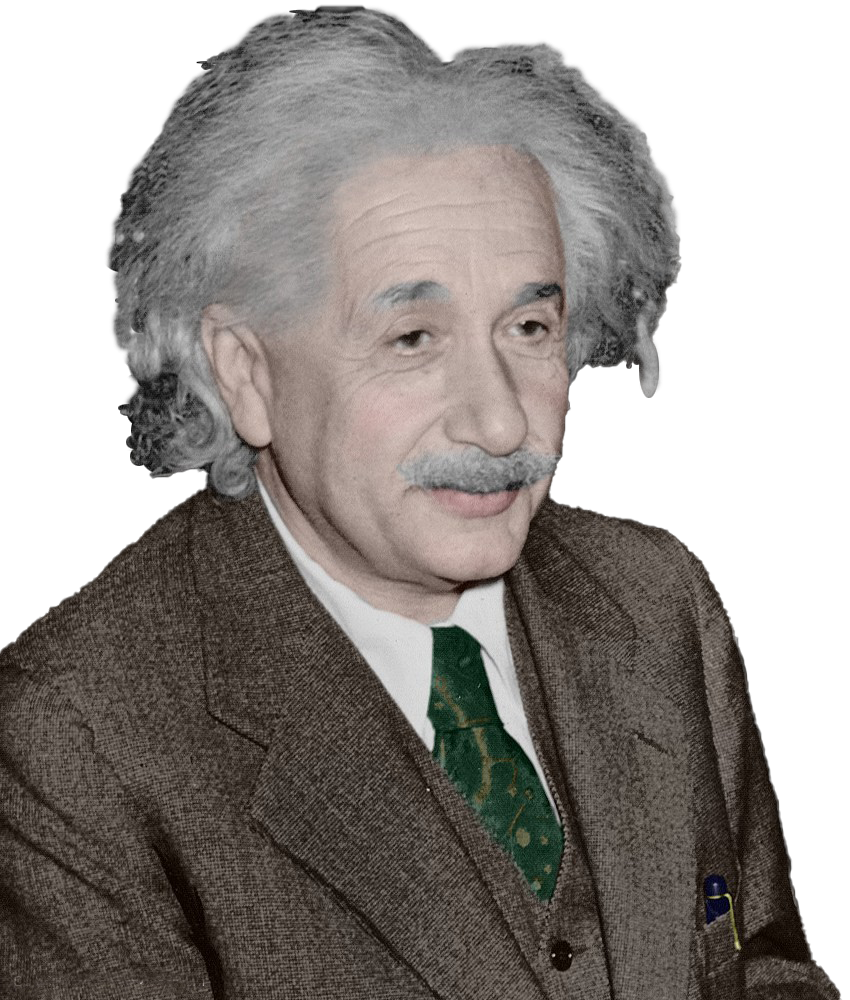 “ Theoretical physicist Albert Einstein thought in concepts, not words”
Whatever feelings we may experience during any form of meditation are likely to be deceptive:
“The divine spirit makes contact with mortal man, not by feelings or emotions, but in the realm of the highest and most spiritualized thinking. It is your thoughts, not your feelings, that lead you Godward” (1104 D)
Those who appeal to other than intellectual experience of divine contact as evidence thereof are in direct conflict with this teaching.
It is true that some people (Albert Einstein was said to be one) apparently do not have their thoughts in words but in complete concepts. But this abnormality might only be suited to tightly-woven abstract logical systems such as mathematics. Nevertheless this is still indicative of intense intellectual activity in which mental quietude plays no substantial part.
“Worshipful Meditation vs. Thought-Stilling Techniques” (Continued:)



